What Languages Are Spoken In New Zealand? WorldAtlas

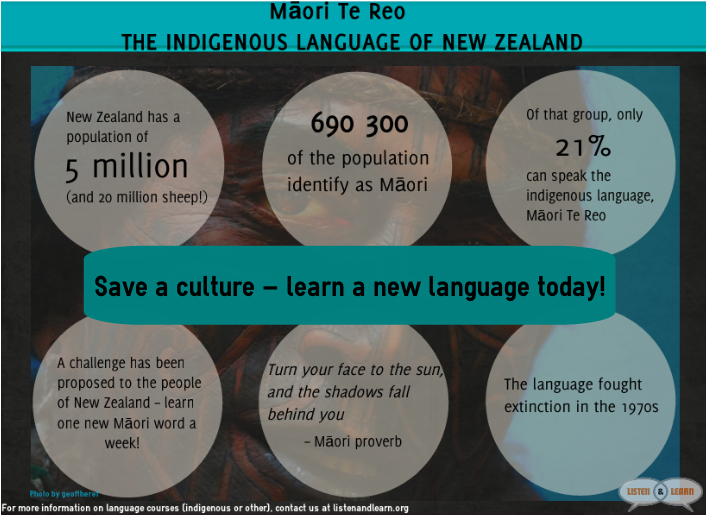
The first kōhanga reo. Te reo Māori is the language of the Māori people of New Zealand. It was made an official language of New Zealand in 1987. In 2013, 21.3% of Māori and 3.7% of the total population could speak te reo Māori. Māori is a Polynesian language, part of the Austronesian language family. There are three major dialects.
Geographical map on the New Zealand and its islands. State also known as Aotearoa on the maori

Languages of New Zealand. English is the predominant language and a de facto official language of New Zealand. Almost the entire population speak it either as native speakers or proficiently as a second language. [1] The New Zealand English dialect is most similar to Australian English in pronunciation, with some key differences.
The Culture Of New Zealand WorldAtlas

Statistics about language tell you about languages spoken in New Zealand. They provide information on our official languages (Māori and NZ Sign Language). They also report on the number of people who speak more than one language, the most commonly spoken languages, and information about other languages spoken.
Mind Your Own Language The Fall And Rise Of Maori Te Reo Listen & Learn
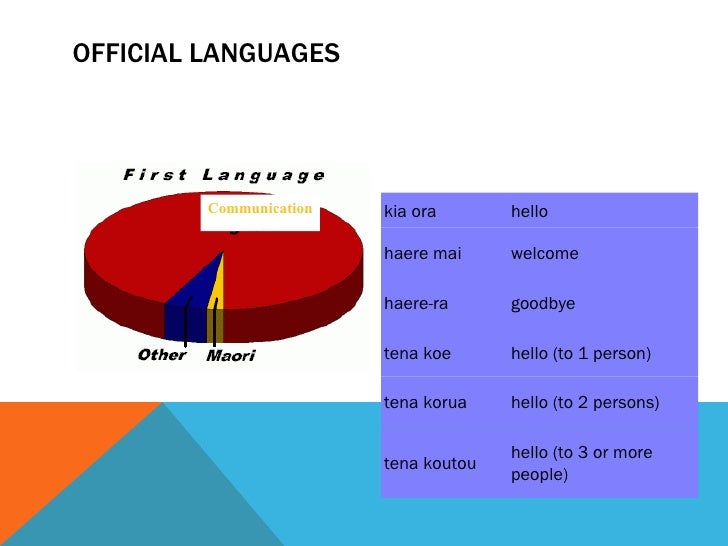
English is the most common spoken language in Aotearoa New Zealand, while Māori and New Zealand Sign Language have special status under the law as official languages. Aotearoa's rich diversity means there are many languages spoken in New Zealand. According to Census 2018, English, te reo Māori, Samoan, Northern Chinese (including Mandarin.
New Zealand Languages

New Zealand Sign Language, or NZSL, is the main language of the deaf community in New Zealand. Te Reo Māori - the Māori Language. Māori is only used in New Zealand and nowhere else in the world. Despite its official status, the language continues to struggle against being lost. In the 1840 Treaty of Waitangi, Queen Victoria promised the.
What languages do people speak in New Zealand? YouTube

However, English is the de facto official language of New Zealand and is the most widely spoken language in the nation. The majority of New Zealanders have a sound knowledge of English. The language is spoken by 3,819,969 people accounting for 96.14% of the population of New Zealand. In contrast, the native Māori language is spoken by only.
PPT New Zealand PowerPoint Presentation ID5948986

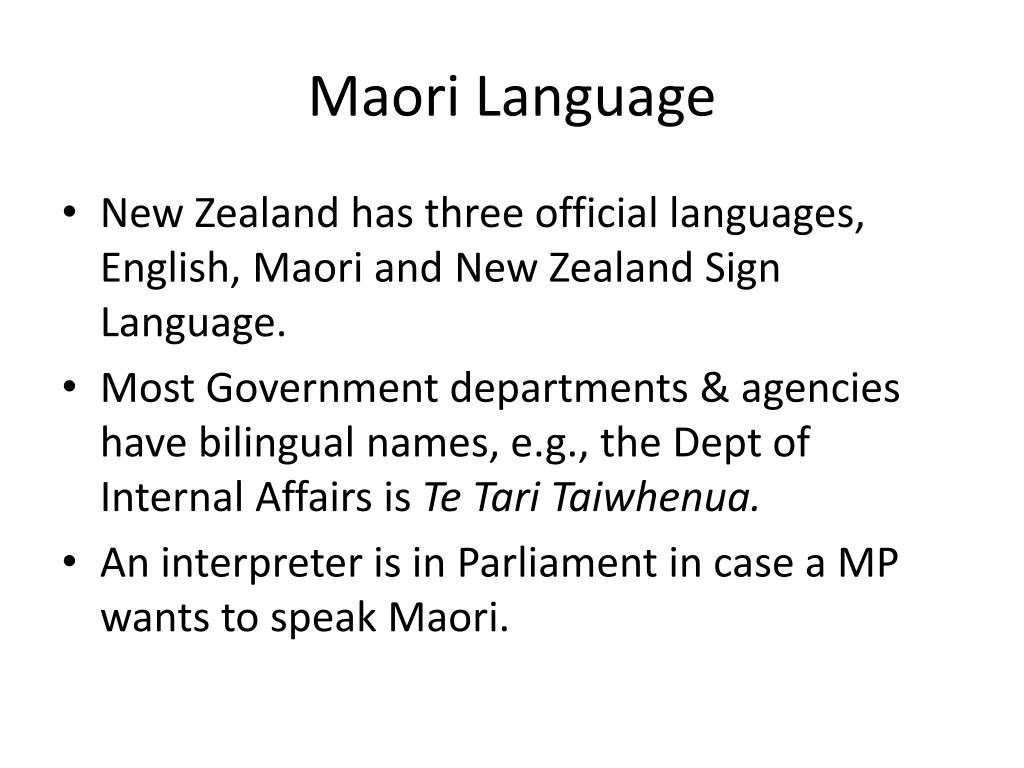
It is part of the coalition agreement between National and NZ First. Te reo Māori was made an official language in 1987, followed by New Zealand sign language in 2006. For many, it will be news.
PPT New Zealand PowerPoint Presentation, free download ID5507219
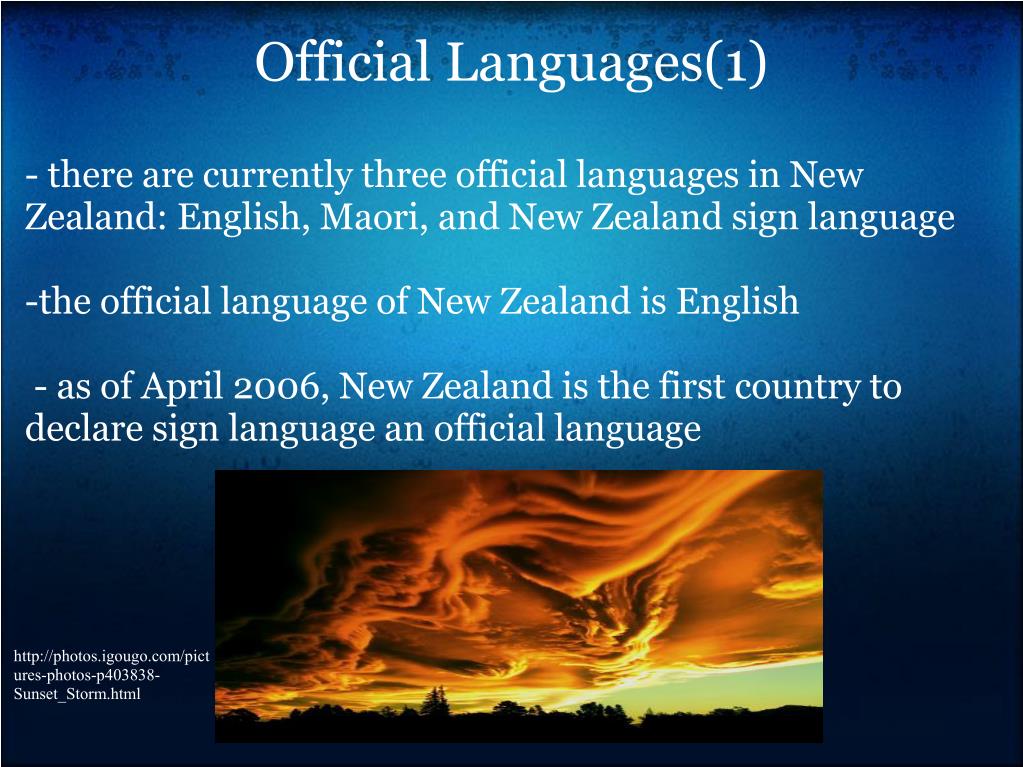
Te reo Māori is an official language in New Zealand, along with New Zealand Sign Language. It was made official in 1987. Number of speakers. Just over a fifth of the Māori population (21.3%) spoke Māori in 2013. The total number of Māori who spoke te reo was 125,352. The total number of speakers, including non-Māori, was 148,395 (3.7% of.
New zealand
Name. The English word Maori is a borrowing from the Māori language, where it is spelled Māori.In New Zealand, the Māori language is often referred to as te reo [tɛ ˈɾɛ.ɔ] ("the language"), short for te reo Māori ("the Māori language").. The Māori-language spelling Māori (with a macron) has become common in New Zealand English in recent years, particularly in Māori-specific.
PPT The Maori culture of New Zealand PowerPoint Presentation, free download ID382442
According to the 2018 Census, English was the most common language spoken in Aotearoa New Zealand, with 95.4 percent of the population able to hold a conversation about everyday things. The next most common languages were te reo Māori (4 percent) and Samoan (2.2 percent). NZSL was used by 0.5 percent of the population. So what would change?
PPT Linguistic Issue PowerPoint Presentation, free download ID4501806
Official Languages. The two official languages of New Zealand are Māori and New Zealand Sign Language. For official languages, though, not many Kiwis speak either one. There are roughly 600,000 ethnic Māori in the country, but only about 100,000 who can understand the language, and 30,000 - 50,000 speakers of the language over 15 years old.
(PDF) A national languages policy for New Zealand Still relevant today?

As a consequence the percentage of the population speaking an 'Other' language in 2013 may be slightly inflated relative to 2001 and 2006. According to the 2013 Census, English and Te Reo Māori are the most widely spoken languages in New Zealand. However, as Table 1 shows, in 2013 there far more people speaking English (3,819,969 people or.
Languages of New Zealand Te Herenga Waka University Press
Source: Statistics New Zealand, the New Zealand Census of Population and Dwellings 2013 * - Cook Island Maori - 2013 census was 8,124. ** - Thai - 2013 census was 7,599. Table 1 includes all of the people who stated each language spoken, whether as their only language or as one of several languages.
What Language Is Spoken In New Zealand?

Other languages in New Zealand include those of migrant communities, predominantly Pacific, Asian and European languages. Whilst there is little formal recognition of these. (Waite 1992). This document was understood to be a precursor to a New Zealand national languages policy (Holmes 1997, Spence 2004, East et al. 2007).
2 Languages Spoken in New Zealand Languages Spoken (total responses) 3 Download Table

The Maori Language Act came into force, making te reo Māori an official language of New Zealand. Until the mid-19th century, te reo Māori was the predominant language spoken in Aotearoa New Zealand. As more English speakers arrived, it was increasingly confined to Māori communities. By the mid-20th century, there were concerns that the.
Languages of New Zealand, 9786136780962, 6136780968 ,9786136780962
New Zealand has three official languages: English, Te Reo Māori, and New Zealand Sign Language. English is the primary language; however, around 4% (or 140,000) of people speak Te Reo. This makes it the second most commonly spoken language in New Zealand. The Māori language is considered a national taonga (treasure) and is undergoing a.